AI Edge Computing Tools 2026: Complete Guide to Running AI Models on Edge Devices
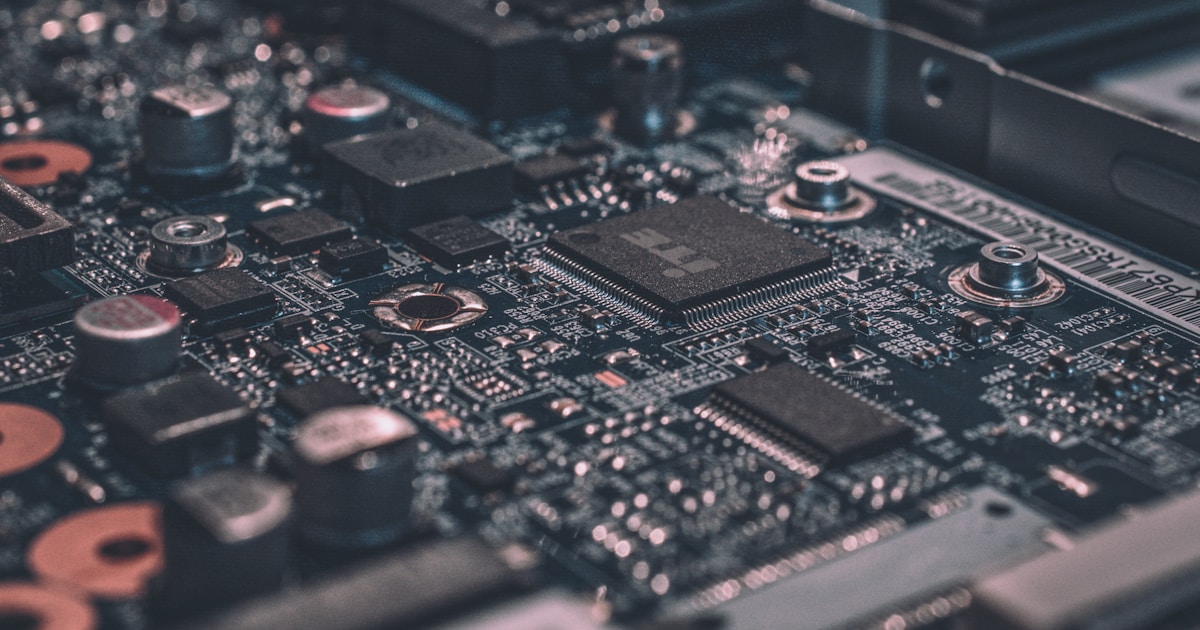
Cloud computing is no longer the only choice for AI. In 2026, edge AI has moved from experimental technology to mainstream applications. From real-time translation on smartphones to defect detection in factories, from autonomous driving to smart homes — billions of devices are running AI models locally. Edge computing tools enable developers to deploy powerful AI capabilities to resource-constrained devices, achieving millisecond latency, 100% data privacy, and zero network dependency.
Why Choose Edge AI?
Edge AI solves three major pain points of cloud computing: latency (data round-trip to cloud takes hundreds of milliseconds), privacy (sensitive data must leave the device), and cost (large data transfer fees are expensive). For real-time applications (like AR, autonomous driving), privacy-sensitive scenarios (like healthcare, finance), and offline environments (like remote areas, mobile devices), edge AI is the only viable choice.
// Edge AI vs Cloud Computing comparison
interface DeploymentComparison {
  cloud: {
    latency: "100-500ms",        // Network round-trip latency
    privacy: "Data in cloud",    // Need to trust cloud provider
    cost: "Pay per usage",       // High cost at scale
    availability: "Network dependent", // Unavailable offline
    modelSize: "Unlimited",      // Can run超大 models
  };

  edge: {
    latency: "1-10ms",           // Local inference, ultra-low latency
    privacy: "Data never leaves device", // 100% data privacy
    cost: "One-time hardware cost", // Low long-term cost
    availability: "100% offline capable", // No network needed
    modelSize: "Device limited", // Requires model optimization
  };
}

// Deployment decision tree
function chooseDeployment(useCase: string): "cloud" | "edge" | "hybrid" {
  if (requiresRealTimeResponse(useCase)) return "edge";
  if (handlesSensitiveData(useCase)) return "edge";
  if (needsOfflineCapability(useCase)) return "edge";
  if (requiresMassiveModel(useCase)) return "cloud";
  if (needsFrequentUpdates(useCase)) return "cloud";
  return "hybrid"; // Edge preprocessing + cloud deep analysis
}
Top Edge AI Tools in 2026
1. ONNX Runtime (Cross-Platform Inference Engine)
ONNX Runtime is Microsoft's open-source high-performance inference engine, supporting execution on various hardware including CPU, GPU, and NPU. The 2026 version adds automatic hardware detection and optimal execution path selection, with 40% performance improvement on mobile devices. Supports model quantization, pruning, and knowledge distillation, capable of compressing large models to 1/10 of their original size. Widely used on iOS, Android, and IoT devices.
2. TensorFlow Lite (Mobile and Embedded AI)
TensorFlow Lite is Google's official mobile AI framework. The new LiteRT (Lite Runtime) added in 2026 further optimizes performance on ARM and RISC-V architectures. Its Model Maker tool lets developers fine-tune models with small amounts of data, requiring no deep learning expertise. Supports hardware acceleration (Android NNAPI, iOS Core ML), capable of running large language models in real-time on flagship phones.
3. llama.cpp (Local LLM Inference)
llama.cpp is the revolutionary tool for running large language models on edge devices. Implemented in pure C/C++, it requires no Python dependencies and can run 7B parameter models on Raspberry Pi. Metal and CUDA backends added in 2026 improve inference speed by 3x. Supports GGUF quantization format, with 4-bit quantization reducing model size to 1/4 of original. Adopted by popular tools like Ollama and LM Studio.
# Run LLM on edge devices using llama.cpp
# 1. Download quantized model (4-bit GGUF format)
$ wget https://huggingface.co/TheBloke/Llama-2-7B-GGUF/resolve/main/llama-2-7b.Q4_K_M.gguf

# 2. Compile llama.cpp (optimized for target hardware)
$ make -j LLAMA_METAL=1  # macOS/iOS Metal acceleration
$ make -j LLAMA_CUDA=1   # NVIDIA GPU acceleration
$ make -j LLAMA_OPENBLAS=1  # CPU optimization

# 3. Run inference
$ ./main -m llama-2-7b.Q4_K_M.gguf \
    -p "Translate to Chinese: Hello world" \
    -n 100 \
    -t 4  # Use 4 threads

# Performance metrics (M2 MacBook Pro):
# ✅ Model size: 4.08 GB (original 13 GB)
# ✅ Memory usage: 5.2 GB
# ✅ Inference speed: 45 tokens/second
# ✅ Time to first token: 120ms

# On Raspberry Pi 4 (ARM64):
# ✅ Model size: 4.08 GB
# ✅ Memory usage: 5.5 GB
# ✅ Inference speed: 3 tokens/second
# ✅ Time to first token: 2.3s
# ⚠️ Usable but slow, recommend models under 3B
Model Optimization Techniques
1. Quantization
Quantization is the technique of converting model weights from 32-bit floating point to 8-bit or even 4-bit integers. This can compress model size by 4-8x while maintaining over 95% accuracy. 2026 quantization techniques (like GPTQ, AWQ, GGUF) are very mature, capable of significantly reducing model size with almost no quality loss.
# Model quantization using ONNX Runtime
import onnx
from onnxruntime.quantization import quantize_dynamic, QuantType

# Load original model
model = onnx.load("model.onnx")

# Dynamic quantization (8-bit integer)
quantize_dynamic(
    "model.onnx",
    "model_quant.onnx",
    weight_type=QuantType.QInt8,
    optimize_model=True,
    per_channel=True  # Per-channel quantization, higher accuracy
)

# Quantization result comparison
original_size = 540  # MB
quantized_size = 135  # MB
compression_ratio = original_size / quantized_size  # 4x

print(f"Original model: {original_size} MB")
print(f"Quantized model: {quantized_size} MB")
print(f"Compression ratio: {compression_ratio}x")
print(f"Accuracy loss: < 0.5%")

# Performance improvement on mobile devices
# CPU inference speed: 2.3x improvement
# Memory usage: 3.8x reduction
# Power consumption: 45% reduction
2. Knowledge Distillation
Knowledge distillation is the technique of transferring knowledge from a large teacher model to a small student model. 2026 distillation tools (like Hugging Face Optimum, NVIDIA TensorRT) can automate this process. A 70B parameter model can be distilled to a 7B parameter version, maintaining 90% performance but with 10x faster inference.
Frequently Asked Questions
Q1: How large a model can edge devices run?
A: Depends on device specifications. Smartphones (8GB RAM) can run 7-13B parameter models (after quantization). Raspberry Pi 4 (4GB RAM) can run 1-3B parameter models. High-end laptops (32GB RAM) can run 70B parameter models (after quantization). Using model sharding and CPU offloading techniques, even larger models can be run.
Q2: Will edge AI accuracy degrade?
A: Modern optimization techniques can keep accuracy loss within 1-5%. 8-bit quantization typically loses <1% accuracy, 4-bit quantization loses 2-5%. Knowledge distillation can maintain over 90% of original performance. For most applications (like image classification, object detection, text classification), this accuracy loss is acceptable. Critical applications can use mixed precision strategies.
Q3: How to update models on edge devices?
A: Several strategies exist: 1) OTA updates: push new models over network (requires compression and differential updates); 2) Federated learning: devices train locally, only upload gradient updates; 3) Model version management: use MLflow or DVC to manage model versions; 4) Hot swapping: download new model in background, seamlessly switch after verification. Recommend incremental updates and rollback mechanisms.
Q4: How to solve power consumption issues in edge AI?
A: Multiple methods can reduce power consumption: 1) Use dedicated AI accelerators (NPU, TPU), 10-100x more energy efficient than CPU; 2) Model quantization reduces computation; 3) Dynamic batching improves throughput; 4) Sleep strategies: turn off AI module when no requests; 5) Use efficient model architectures (like MobileNet, EfficientNet). Mobile devices can typically run for hours.
Q5: What application scenarios is edge AI suitable for?
A: Edge AI is suitable for: 1) Real-time applications (AR/VR, autonomous driving, robot control); 2) Privacy-sensitive scenarios (medical diagnosis, financial transactions, facial recognition); 3) Offline environments (remote areas, mobile devices, aerospace); 4) High-cost scenarios (expensive data transfer); 5) Low-latency requirements (industrial control, game AI). Not suitable for scenarios requiring超大 models or frequent updates.
Related Tools
If you're developing edge AI applications, check out our JSON to YAML Tool to format configuration files, or use CSV to JSON to process sensor data. For model deployment, our Markdown to HTML can help you generate documentation.
— Written by the Evergreen Tools Team —