
1. The Evolution of AI Kubernetes Operations
**Pain Points of Traditional K8s Operations**:
1. **Reactive Response**: Problems are handled after they occur, causing service interruptions
2. **Complex Configuration**: HPA/VPA configuration requires extensive experience tuning
3. **Time-Consuming Troubleshooting**: Distributed system fault location is difficult
4. **Resource Waste**: Over-provisioning leads to high costs
5. **Human Dependency**: Requires 24/7 on-call teams
**2026 AI Operations Transformation**:
- **Predictive Operations**: Prevent problems before they occur
- **Adaptive Optimization**: Automatically adjust based on real-time load
- **Intelligent Fault Handling**: Automatic diagnosis and repair
- **Cost Optimization**: Intelligent resource allocation reduces waste
**Key Metrics**:
- Operations incidents reduced by 75%
- Resource costs reduced by 40%
- Fault recovery time shortened by 85%
- Operations personnel needs reduced by 60%
2. Intelligent Scaling Systems
**AI-Driven HPA (Horizontal Pod Autoscaling)**:
```yaml
apiVersion: autoscaling/v2
kind: HorizontalPodAutoscaler
metadata:
name: ai-powered-hpa
spec:
scaleTargetRef:
apiVersion: apps/v1
kind: Deployment
name: web-app
minReplicas: 3
maxReplicas: 100
metrics:
# Traditional metrics
- type: Resource
resource:
name: cpu
target:
type: Utilization
averageUtilization: 70
# AI prediction metrics
- type: External
external:
metric:
name: ai_predicted_load
selector:
matchLabels:
app: web-app
target:
type: Value
value: "80"
behavior:
scaleUp:
stabilizationWindowSeconds: 30
policies:
- type: Percent
value: 100
periodSeconds: 60
- type: Pods
value: 10
periodSeconds: 60
selectPolicy: Max
scaleDown:
stabilizationWindowSeconds: 300
policies:
- type: Percent
value: 10
periodSeconds: 60
```
**AI Prediction Engine**:
```python
from kubernetes import client, config
from ai_predictor import LoadPredictor
class IntelligentScaler:
def __init__(self):
config.load_incluster_config()
self.v1 = client.CoreV1Api()
self.apps_v1 = client.AppsV1Api()
self.predictor = LoadPredictor(
history_window="7d",
forecast_horizon="1h",
confidence_level=0.95
)
async def predict_and_scale(self, deployment_name: str, namespace: str):
"""Predict load and auto-scale"""
# 1. Get historical metrics
metrics = await self.get_historical_metrics(
deployment=deployment_name,
namespace=namespace,
duration="7d"
)
# 2. AI forecast future load
forecast = await self.predictor.forecast(
metrics=metrics,
features=[
"time_of_day",
"day_of_week",
"recent_trend",
"external_events" # e.g., marketing campaigns
]
)
# 3. Calculate required replicas
current_replicas = await self.get_current_replicas(
deployment_name, namespace
)
predicted_load = forecast.peak_load
required_replicas = self.calculate_replicas(
predicted_load=predicted_load,
target_utilization=0.7,
current_replicas=current_replicas
)
# 4. Execute scaling (if difference is significant)
if abs(required_replicas - current_replicas) > 2:
await self.scale_deployment(
deployment_name,
namespace,
required_replicas
)
# 5. Log decision
await self.log_scaling_decision(
deployment=deployment_name,
from_replicas=current_replicas,
to_replicas=required_replicas,
reason=f"Predicted load: {predicted_load}",
confidence=forecast.confidence
)
return {
"current_replicas": current_replicas,
"predicted_load": predicted_load,
"required_replicas": required_replicas,
"scaled": required_replicas != current_replicas
}
```
**Vertical Pod Autoscaling (VPA) Optimization**:
```python
from vpa_optimizer import ResourceOptimizer
class IntelligentVPA:
def __init__(self):
self.optimizer = ResourceOptimizer(
target_utilization=0.75,
safety_margin=1.2,
update_policy="Auto"
)
async def optimize_resources(self, workload: str):
"""Optimize Pod resource requests and limits"""
# 1. Collect actual usage data
usage_data = await self.collect_usage_data(
workload=workload,
duration="24h",
percentile=99 # Use P99 to avoid bursts
)
# 2. AI recommend resource configuration
recommendations = await self.optimizer.recommend(
cpu_usage=usage_data.cpu,
memory_usage=usage_data.memory,
oom_events=usage_data.oom_count,
throttling_events=usage_data.throttle_count
)
# 3. Apply recommendations
vpa_config = {
"target": {
"cpu": recommendations.cpu_request,
"memory": recommendations.memory_request
},
"lowerBound": {
"cpu": recommendations.cpu_lower,
"memory": recommendations.memory_lower
},
"upperBound": {
"cpu": recommendations.cpu_upper,
"memory": recommendations.memory_upper
}
}
# 4. Update VPA object
await self.apply_vpa(workload, vpa_config)
return {
"recommendations": recommendations,
"estimated_savings": self.calculate_savings(
current=usage_data.current_requests,
recommended=recommendations
),
"risk_level": self.assess_risk(recommendations)
}
```

3. Intelligent Fault Diagnosis and Self-Healing
**AI Fault Detection System**:
```typescript
import { KubernetesClient } from '@kubernetes/client-node';
import { AnomalyDetector } from './anomaly-detector';
class IntelligentFaultDetection {
private kc: KubernetesClient;
private detector: AnomalyDetector;
constructor() {
this.kc = new KubernetesClient();
this.detector = new AnomalyDetector({
sensitivity: 'high',
detectionWindow: '5m',
algorithms: ['isolation_forest', 'lstm', 'statistical']
});
}
async detectAnomalies() {
// 1. Collect cluster metrics
const metrics = await this.collectClusterMetrics([
'pod_restarts',
'error_rates',
'latency_p99',
'resource_utilization',
'network_errors',
'disk_io'
]);
// 2. AI anomaly detection
const anomalies = await this.detector.detect(metrics);
// 3. Correlation analysis
const correlatedEvents = await this.correlateEvents(anomalies);
// 4. Root cause analysis
const rootCauses = await this.analyzeRootCause(correlatedEvents);
return {
anomalies: anomalies,
correlations: correlatedEvents,
rootCauses: rootCauses,
severity: this.calculateSeverity(anomalies, rootCauses)
};
}
private async correlateEvents(anomalies: Anomaly[]) {
// Get related events
const events = await this.kc.getEvents({
timeRange: '1h',
namespaces: ['*']
});
// AI correlation analysis
const correlations = await this.detector.correlate(
anomalies,
events
);
return correlations;
}
private async analyzeRootCause(correlations: Correlation[]) {
// Use knowledge graph for root cause analysis
const knowledgeGraph = await this.buildDependencyGraph();
const rootCauses = await this.detector.findRootCause(
correlations,
knowledgeGraph
);
return rootCauses;
}
}
```
**Auto-Repair System**:
```python
from kubernetes import client, config
from repair_strategies import RepairStrategy
class AutoHealingSystem:
def __init__(self):
config.load_incluster_config()
self.v1 = client.CoreV1Api()
self.apps_v1 = client.AppsV1Api()
async def heal(self, incident: Incident):
"""Auto-repair faults"""
# 1. Determine repair strategy
strategy = await self.select_strategy(incident)
# 2. Execute repair
result = await self.execute_repair(strategy, incident)
# 3. Verify repair
verification = await self.verify_repair(incident, result)
# 4. Log results
await self.log_healing_action(
incident=incident,
strategy=strategy.name,
result=result,
verified=verification.success
)
return {
"incident_id": incident.id,
"strategy": strategy.name,
"result": result,
"verified": verification.success,
"duration": result.duration
}
async def select_strategy(self, incident: Incident) -> RepairStrategy:
"""Select best repair strategy"""
strategies = {
"pod_crash_loop": RepairStrategy(
name="restart_with_backoff",
action=self.restart_pods,
conditions=["CrashLoopBackOff"],
max_retries=3
),
"high_error_rate": RepairStrategy(
name="rollback_deployment",
action=self.rollback_deployment,
conditions=["error_rate > 5%"],
max_retries=1
),
"node_not_ready": RepairStrategy(
name="drain_and_replace",
action=self.replace_node,
conditions=["NodeNotReady"],
max_retries=1
),
"memory_pressure": RepairStrategy(
name="scale_and_optimize",
action=self.scale_and_optimize_memory,
conditions=["MemoryPressure"],
max_retries=2
),
"network_partition": RepairStrategy(
name="isolate_and_repair",
action=self.repair_network,
conditions=["NetworkPartition"],
max_retries=1
)
}
# AI select most suitable strategy
selected = await self.ai_select_strategy(
incident=incident,
strategies=strategies,
historical_success_rates=self.get_success_rates()
)
return selected
```
**Incident Response Automation**:
```yaml
# Incident response workflow
apiVersion: argoproj.io/v1alpha1
kind: Workflow
metadata:
name: incident-response
spec:
entrypoint: incident-handler
templates:
- name: incident-handler
steps:
- - name: detect
template: detect-incident
- - name: classify
template: classify-severity
arguments:
parameters:
- name: incident
value: "{{steps.detect.outputs.result}}"
- - name: notify
template: notify-team
arguments:
parameters:
- name: severity
value: "{{steps.classify.outputs.result.severity}}"
- - name: auto-fix
template: attempt-auto-fix
when: "{{steps.classify.outputs.result.auto_fixable}} == true"
- - name: escalate
template: escalate-to-human
when: "{{steps.auto-fix.outputs.result.success}} == false"
- name: detect-incident
container:
image: ai-incident-detector:latest
command: [python, detect.py]
- name: classify-severity
container:
image: ai-classifier:latest
command: [python, classify.py]
- name: attempt-auto-fix
container:
image: auto-healer:latest
command: [python, heal.py]
```
4. Cost Optimization and Intelligent Resource Allocation
**Intelligent Node Pool Management**:
```python
from kubernetes import client, config
from cost_optimizer import NodePoolOptimizer
class IntelligentNodePoolManager:
def __init__(self):
config.load_incluster_config()
self.optimizer = NodePoolOptimizer()
async def optimize_node_pools(self):
"""Optimize node pool configuration"""
# 1. Analyze workload characteristics
workload_analysis = await self.analyze_workloads()
# 2. Predict future demand
demand_forecast = await self.predict_demand(
workload_analysis=workload_analysis,
horizon="7d"
)
# 3. Optimize node pool configuration
recommendations = await self.optimizer.recommend(
current_pools=await self.get_current_pools(),
demand_forecast=demand_forecast,
cost_constraints={
"max_monthly_budget": 10000,
"target_utilization": 0.75
},
instance_types=[
"m5.large", "m5.xlarge", # General purpose
"c5.large", "c5.xlarge", # Compute optimized
"r5.large", "r5.xlarge" # Memory optimized
]
)
# 4. Apply recommendations
for rec in recommendations:
if rec.action == "create":
await self.create_node_pool(rec.config)
elif rec.action == "resize":
await self.resize_node_pool(rec.pool_name, rec.config)
elif rec.action == "delete":
await self.delete_node_pool(rec.pool_name)
return {
"recommendations": recommendations,
"estimated_savings": sum(r.savings for r in recommendations),
"risk_assessment": self.assess_risk(recommendations)
}
```
**Spot Instance Intelligent Scheduling**:
```typescript
import { SpotOptimizer } from './spot-optimizer';
class SpotInstanceScheduler {
private optimizer: SpotOptimizer;
constructor() {
this.optimizer = new SpotOptimizer({
interruptionTolerance: 0.05, // 5% interruption tolerance
costSavingTarget: 0.60, // 60% cost saving target
workloadCriticality: 'medium'
});
}
async scheduleWorkloads() {
// 1. Analyze workloads
const workloads = await this.analyzeWorkloads();
// 2. Categorize workloads
const categorized = this.categorizeWorkloads(workloads);
// 3. Select best instance type for each category
const schedule = await this.optimizer.createSchedule({
critical: {
workloads: categorized.critical,
instanceType: 'on-demand',
reason: 'Cannot tolerate interruption'
},
batch: {
workloads: categorized.batch,
instanceType: 'spot',
spotStrategy: {
maxPrice: 0.40,
instancePools: 5,
fallbackToOnDemand: true
}
},
faultTolerant: {
workloads: categorized.faultTolerant,
instanceType: 'spot',
spotStrategy: {
maxPrice: 0.30,
instancePools: 10,
fallbackToOnDemand: false
}
}
});
// 4. Apply schedule
await this.applySchedule(schedule);
return {
schedule: schedule,
estimatedSavings: schedule.estimatedSavings,
interruptionRisk: schedule.interruptionRisk
};
}
private categorizeWorkloads(workloads: Workload[]) {
return {
critical: workloads.filter(w => w.criticality === 'high'),
batch: workloads.filter(w => w.type === 'batch' && w.criticality !== 'high'),
faultTolerant: workloads.filter(w => w.faultTolerant)
};
}
}
```
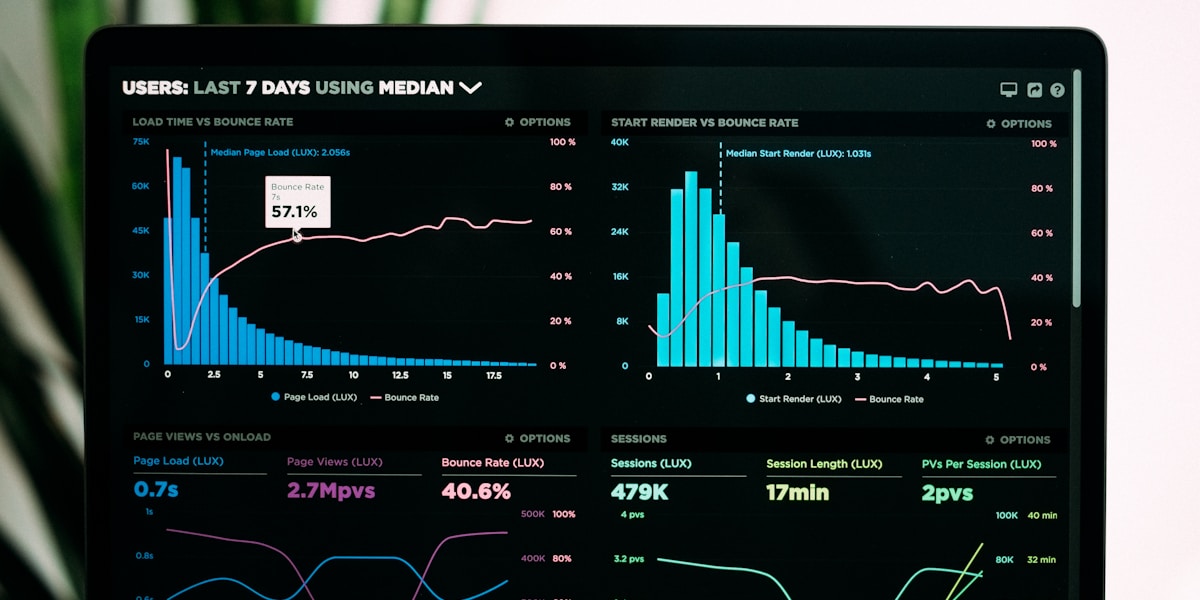
**Real-Time Cost Monitoring**:
```python
from cost_monitor import CostMonitor
class RealTimeCostTracker:
def __init__(self):
self.monitor = CostMonitor()
async def track_costs(self):
"""Real-time Kubernetes cost tracking"""
# 1. Collect cost data
costs = await self.monitor.collect_costs(
resources=[
"compute",
"storage",
"network",
"services"
]
)
# 2. Analyze by dimensions
breakdown = {
"by_namespace": await self.monitor.breakdown_by("namespace"),
"by_workload": await self.monitor.breakdown_by("workload"),
"by_team": await self.monitor.breakdown_by("team"),
"by_resource_type": await self.monitor.breakdown_by("resource_type")
}
# 3. Identify waste
waste = await self.identify_waste(costs)
# 4. Generate optimization recommendations
recommendations = await self.generate_recommendations(
costs=costs,
breakdown=breakdown,
waste=waste
)
# 5. Send alerts (if over budget)
if costs.total > self.budget_threshold:
await self.send_budget_alert(costs)
return {
"total_cost": costs.total,
"breakdown": breakdown,
"waste": waste,
"recommendations": recommendations,
"budget_status": self.get_budget_status(costs.total)
}
```
5. Implementation Roadmap
**Phase 1: Basic Monitoring (1-2 weeks)**
```bash
# Deploy monitoring stack
kubectl apply -f https://raw.githubusercontent.com/ai-k8s-ops/stack/main/monitoring.yaml
# Includes components
# - Prometheus + Thanos (metrics storage)
# - Grafana (visualization)
# - AI anomaly detector
# - Intelligent alerting system
```
**Phase 2: Intelligent Scaling (2-4 weeks)**
```yaml
# Deploy AI HPA
kubectl apply -f ai-hpa.yaml
# Configure prediction engine
kubectl create configmap ai-predictor-config --from-file=config.yaml -n kube-system
# Deploy prediction service
kubectl apply -f ai-predictor-deployment.yaml
```
**Phase 3: Auto-Repair (4-6 weeks)**
```bash
# Deploy auto-repair system
kubectl apply -f auto-healer/
# Configure repair strategies
kubectl apply -f repair-strategies/
# Enable auto-repair mode
kubectl patch configmap auto-healer-config -n kube-system -p '{"data":{"mode":"auto"}}'
```
**Phase 4: Cost Optimization (6-8 weeks)**
```python
# Enable cost optimization
from k8s_cost_optimizer import enable_optimization
enable_optimization({
"node_pool_optimization": True,
"spot_instance_scheduling": True,
"resource_rightsizing": True,
"waste_detection": True
})
```
**Complete Implementation Checklist**:
```markdown
## AI Kubernetes Operations Implementation Checklist
### Phase 1: Basic Monitoring
- [ ] Deploy Prometheus + Thanos
- [ ] Configure Grafana dashboards
- [ ] Enable AI anomaly detection
- [ ] Set up intelligent alerts
### Phase 2: Intelligent Scaling
- [ ] Deploy AI HPA
- [ ] Configure prediction engine
- [ ] Test prediction accuracy
- [ ] Enable auto-scaling
### Phase 3: Auto-Repair
- [ ] Deploy auto-repair system
- [ ] Configure repair strategies
- [ ] Test repair workflows
- [ ] Enable auto-repair
### Phase 4: Cost Optimization
- [ ] Enable node pool optimization
- [ ] Configure Spot instance scheduling
- [ ] Enable resource optimization
- [ ] Set up cost alerts
### Continuous Improvement
- [ ] Weekly AI decision review
- [ ] Monthly model optimization
- [ ] Quarterly ROI evaluation
```
Use our [JSON Formatter Tool](/tools/json-formatter) to configure your Kubernetes resources.
Conclusion
AI Kubernetes operations have moved from concept to reality in 2026. Key takeaways:
1. **Incremental Implementation**: Start with monitoring, gradually add intelligent features
2. **Data-Driven**: AI decisions based on high-quality historical data
3. **Human-AI Collaboration**: AI handles routine tasks, humans handle complex decisions
4. **Continuous Optimization**: Regularly evaluate and adjust AI models
Start your AI Kubernetes operations journey now and take cluster management to the next level. Explore our [Developer Tools Collection](/tools) to optimize your cloud-native architecture.
Frequently Asked Questions
How much historical data does the AI operations system need?
Minimum 7 days of data to start predictions, but 30+ days is recommended for more accurate forecasts.
Is auto-repair safe?
Recommend running in observation mode first, verifying AI decision accuracy before enabling auto-repair. Critical systems should retain human approval.
How much cost savings can I expect?
Typical savings are 30-60%, mainly from intelligent scaling, Spot instance usage, and resource optimization.
Which Kubernetes distributions are supported?
Supports all major distributions: EKS, GKE, AKS, OpenShift, Rancher, etc.
How do you handle AI misjudgments?
The system has built-in rollback mechanisms, all AI operations are traceable. Misjudgment rate is typically below 5% and continuously improving.