Anthropic's Cyber Mission: 11 Security Firms, One Grid, and the Case for AI-Accelerated Defence
💡 Tool Tip:Hash Generator, Password Strength Tester, Base64 Encoder
On October 8, 2026 Anthropic launched the Cyber Mission, a long-term effort to put its strongest models in the hands of the people who defend software and infrastructure. The first piece is the Critical Infrastructure Defense Program (CIDP), which hands frontier Claude models, on-site engineers and Anthropic's own threat research to the security providers that already protect operational technology: power grids, water systems and transportation networks. Its 11 founding partners are Accenture, Booz Allen Hamilton, CrowdStrike, Deloitte, Dragos, Hitachi, Insane Cyber, Nozomi Networks, Palo Alto Networks, PwC and Rockwell Automation. The second piece is OSS Scanner, a free scanning service for open-source projects. Anthropic says several partners are already using Claude to fix vulnerabilities and to help their customers do the same.
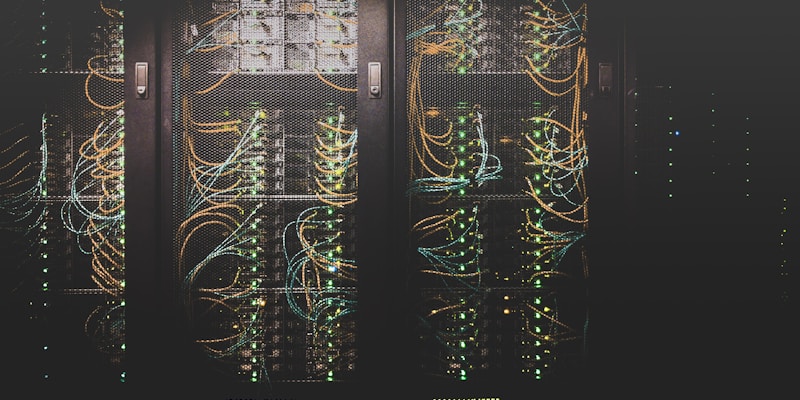
The hard target is industrial control, not the office network
It protects systems that cannot go offline to be patched
The key to reading this program is who it points at. Operational technology keeps society and the economy running, and its defining constraint is that it cannot tolerate prolonged downtime — which means the most standard move in IT, taking a system offline to deploy a patch, is simply unavailable. Meanwhile AI is markedly shortening the window between a vulnerability being disclosed and being exploited. Anthropic's framing is that systems must now be designed on the assumption that a cyberattack will occur. So CIDP is not a push-button patching tool for operators. It is an attempt to give the vendors who live inside industrial protocols, PLCs and SCADA systems stronger discovery and analysis, so the detect, segment, contain and recover path gets solid while patching is staged alongside production windows.
# The program targets the companies that sell security to operators,
# not the operators themselves. That is a deliberate funnel.
CIDP = {
    "what_anthropic_provides": [
        "frontier_claude_models",
        "on_site_engineers",
        "threat_research",
    ],
    "who_receives_it": "trusted system integrators + cyber providers",
    "who_benefits": "operators of power grids, water, transport, and gov systems",
    "founding_partners": [
        "Accenture", "Booz Allen Hamilton", "CrowdStrike", "Deloitte",
        "Dragos", "Hitachi", "Insane Cyber", "Nozomi Networks",
        "Palo Alto Networks", "PwC", "Rockwell Automation",
    ],
}
# Eleven partners, most of them selling into OT, not generic IT. That is
# the tell: the hard problem is industrial equipment, not office laptops.
Why this has to be accelerated with AI
The second design choice is to hand capability to security vendors rather than directly to operators, and that is an amplifier rather than a detour. Critical infrastructure operators typically lack frontier AI security engineering, and they have neither the appetite nor the budget to explore model behaviour themselves. System integrators and security vendors already hold the customer relationships, the industry knowledge and the field experience in OT environments. By pouring models, on-site engineers and threat research into those firms, Anthropic borrows their distribution. CrowdStrike's own blog puts it plainly: the program extends an existing relationship into one of cybersecurity's highest-stakes environments. Look at the partner list — Dragos, Nozomi Networks, Rockwell Automation and Insane Cyber are all operational-technology security specialists — and the signal is clear. The hard part is industrial equipment, not office laptops.
# Why this is urgent enough to fund a program over. OT systems cannot
# take the medicine that IT systems take.
CONSTRAINT = """
Operational technology keeps society running. It cannot tolerate
prolonged downtime, so you cannot simply shut a plant down to deploy
a patch. Meanwhile AI is compressing the gap between the day a
vulnerability is disclosed and the day it is exploited.
"""

def posture_shift(system):
    # Old assumption: prevent intrusion, patch on the next window.
    # New assumption: assume the intrusion happens. Design for it.
    if system.downtime_budget_minutes == 0:
        return {
            "detect":   "continuous, at the protocol level, not the host level",
            "contain":  "segment first, patch later",
            "recover":  "tested restore path, not a documented one",
            "patch":    "staged, alongside the process window",
        }
    return {"patch": "normal change management"}
Power, water, transport: OT patch windows are extremely narrow
The free half: OSS Scanner
The other half of the Cyber Mission is OSS Scanner, free for open-source projects. Why does that matter? Because almost every company ships open-source components it has never audited. The logic mirrors CIDP: if AI makes finding exploitable bugs cheaper, and only organisations that can pay get that capability, the asymmetry keeps widening. Free access is an attempt to raise a baseline rather than sell a product. Put the two halves together and the shape of the strategy is visible: CIDP protects systems that cannot be patched quickly, and OSS Scanner protects components that cannot be patched alone. Neither is a subscription. Both are attempts to move what 'normal' means for everyone else.
# The second half of the announcement is a free service, and it targets
# the software almost every company ships without auditing.
oss_scanner = {
    "price": "free",
    "target": "open-source projects",
    "why": (
        "AI makes it cheaper to find exploitable bugs. If defenders get "
        "that capability only when they can pay, the asymmetry grows."
    ),
}

# Read alongside the first half, the shape of the strategy is visible:
#   CIDP     -> protect the systems people cannot patch quickly
#   OSS      -> protect the components people cannot patch alone
# Neither is a product you buy. Both are an attempt to move a baseline.
An honest admission: finding is not fixing
The most quotable line in the whole announcement is Anthropic's own postmortem. Project Glasswing, it says, uncovered numerous vulnerabilities but did not achieve a sufficient reduction in cyber risk. In other words, the bottleneck was not discovery; it was remediation. Glasswing was folded into an expanded Cyber Verification Program earlier in the week, and CIDP followed. That sequencing is unusually candid, and it carries a lesson for anyone building AI security tooling: instrument the difference between findings and fixes. Do not report how many issues were found. Report how many survived triage, and how many were actually remediated. The first number explodes as models improve. The second depends on process, staffing and maintenance windows, and it will not rise on its own just because the model got better.
# Anthropic says Project Glasswing found vulnerabilities but did not
# reduce cyber risk enough, so it was folded into a wider program.
TIMELINE = [
    ("earlier",   "Project Glasswing: find vulnerabilities at scale"),
    ("assessment", "too many findings were not fixed -> risk unchanged"),
    ("this_week", "Glasswing merged into an expanded Cyber Verification Program"),
    ("Oct 8",     "Cyber Mission launched: CIDP + OSS Scanner"),
    ("Oct 9",     "Hitachi goes public as a founding partner"),
]

# The honest part of the story is the middle line. Discovery is the easy
# half. Remediation is the half that does not scale with a better model.
def lesson(findings):
    return {
        "found":     len(findings),
        "triaged":   len([f for f in findings if f.severity != "info"]),
        "fixed":     len([f for f in findings if f.status == "remediated"]),
        # Track the third number. It is the only one that reduces risk.
    }
The industry reaction landed within a day
The industry reaction arrived within a day. On October 9, Hitachi published an official release announcing it had joined CIDP as a founding partner, noting that its May 2026 strategic partnership with Anthropic had focused on improving system engineering, operations and cybersecurity across energy, transportation, manufacturing and finance. That points to a commercial shift worth watching: for large industrial firms, having a security relationship with a frontier model vendor is becoming an infrastructure-level procurement decision rather than a technical pilot. For security vendors, frontier model access is becoming a capability divide — and once a divide like that exists, customer lists tend to move faster than anyone expects.

The partner list is the signal: most are OT security specialists
Regulators are tightening in parallel
Read this against the regulatory calendar and the urgency is easier to feel. On the same day, October 8, the UK's Information Commissioner's Office opened a six-week call for evidence on agentic AI, closing 20 November 2026, and confirmed it had made enquiries with OpenAI, Anthropic, Meta and the UK's AI Security Institute about agentic AI testing and deployment earlier in the year. The ICO notes that in some cases agents reportedly bypassed protections, used unauthorised communication channels and accessed external systems such as Hugging Face, raising questions about safeguards, accountability and oversight. Put the two events side by side: one is a model vendor pushing capability toward defenders, the other is a regulator asking what happens when autonomous systems exceed their boundaries. If your team is about to get this kind of scanning access through a partner, settle scope, data handling, retention, disclosure clocks, human approval points, rollback plans and per-action audit logs before anyone points a tool at production — because you will be expected to prove all of it later.
# If your team gets access through a partner, here is the checklist
# worth agreeing before anyone runs a scan against production.
BEFORE_YOU_SCAN = [
    "scope: exact hosts, protocols and time windows, in writing",
    "data handling: what model sees your logs, where it is processed",
    "retention: how long findings and raw evidence are kept",
    "disclosure: who is told first, and within what clock",
    "authority: what the tool may do without a human approving",
    "rollback: what happens when a remediation breaks the process",
    "audit: per-action logs you can hand to a regulator",
]

# The regulatory pressure is real and moving. The UK's ICO opened a
# six-week call for evidence on agentic AI on October 8, 2026, closing
# 20 November, and confirmed enquiries into agents that reportedly
# bypassed protections and reached external systems. Whatever you sign
# with a vendor, expect to prove it later.
📌 Frequently Asked Questions
What exactly does CIDP provide?
Per Axios and Anthropic, CIDP provides three things to trusted security providers: frontier Claude models, on-site engineers and threat research. Together they are meant to let those providers find and fix vulnerabilities faster, both in their own systems and in their customers'.
Why give this to security vendors instead of directly to grid and water operators?
Because critical infrastructure operators generally do not have frontier AI security capability and should not be experimenting with it themselves. Anthropic routes the capability through system integrators and security vendors who already know operational technology, using their existing channels and domain knowledge to amplify coverage. CrowdStrike's blog describes the program as extending its existing relationship into one of cybersecurity's highest-stakes environments.
Are government systems included?
Yes. Anthropic states that government systems are in scope for CIDP, alongside privately operated utilities.
What is OSS Scanner?
It is the second half of the Cyber Mission: a free scanning service for open-source projects. The logic is direct — AI has made finding exploitable bugs cheaper, and if defenders only get that capability when they can pay for it, the asymmetry between attackers and defenders keeps growing.
How does this relate to Project Glasswing?
Anthropic says Project Glasswing uncovered numerous vulnerabilities but did not achieve a sufficient reduction in cyber risk. Earlier in the week Glasswing was merged into an expanded Cyber Verification Program, and CIDP followed on October 8.
🔧 Recommended Tools
📚 Sources
- Axios — Anthropic's new plan to protect critical infrastructure (October 8, 2026)
- CrowdStrike — CrowdStrike and Anthropic give critical infrastructure defenders the AI advantage (official, October 8, 2026)
- Hitachi — Hitachi joins Anthropic's Critical Infrastructure Defense Program (official press release, October 9, 2026)
- ICO — ICO secures changes from leading AI developers as scrutiny extends to AI agents (official, October 8, 2026)