Anthropic's September Threat Report: Agent Frameworks Are the Attack Surface, the API Key Is the Loot
On September 10, 2026, Anthropic published its fourth threat-intelligence report, "Detecting and countering misuse of AI: September 2026," covering misuse it disrupted between December 2025 and August 2026 across seven harm areas: cyber operations, influence operations, surveillance, conventional weapons, biological misuse, scams and fraud, and illicit distillation. For builders, this is not just news. It reads as a free penetration-test checklist for wherever your agent stack is weakest.

"Seven harm areas, one lesson"
1. Attacks Run on Agent Frameworks
The line worth screenshotting: attackers stopped treating the model as a chat box and started treating the agent framework as an execution environment. Tool calls, file reads and writes, and code execution are exactly what make agents useful, and they are equally the footholds of an attack chain. Every capability you wire in for productivity raises the attacker's productivity by the same amount. The design principle that follows: separate "what it can do" from "what it can touch." Capability is for the user; the permission boundary belongs to the system. In practice that means your tool schemas, your file-access scopes, and your code-execution sandbox are first-class security artifacts, not implementation details you can leave to framework defaults.
// 1) Redact sensitive fields BEFORE any outbound model call.
const SENSITIVE = [
  /d{16}/g,                 // card-like numbers
  /d{3}-d{2}-d{4}/g,     // SSN-like
  /[w.+-]+@[w-]+.[w.]+/g,     // emails
  /(?:sk|tvly)-[A-Za-z0-9_-]{10,}/g, // API keys
];

function redact(text) {
  let out = text;
  for (const re of SENSITIVE) out = out.replace(re, "[REDACTED]");
  return out;
}
const safe = redact(userPrompt);   // send safe, never userPrompt
2. Distillation Started Borrowing Real Customer Traffic
Anthropic says seven China-based labs ran distillation campaigns against Claude, one attributed to Alibaba described as "the largest distillation attack we have ever measured," with over 151 million exchanges between May and July 2026. The more alarming shift is method: the report says Moonshot and DeepSeek silently relayed their own users' requests to Claude (routed to Claude Opus) and saved those exchanges for training. DeepSeek also built a chain-of-thought extraction pipeline relying on a cross-session replay attack. The affected users were likely never told.
# 2) One revocable, scoped identity per agent. No shared super key.
AGENTS = {
    "agent-42": {"scopes": ["read:docs"], "expires_at": "2026-10-01"},
    "agent-43": {"scopes": ["read:docs", "write:notes"], "expires_at": "2026-10-01"},
}

def authorize(agent_id: str, scope: str, now: str) -> bool:
    a = AGENTS.get(agent_id)
    if not a or a["expires_at"] < now:
        return False                     # revoked or expired: deny
    return scope in a["scopes"]
3. What This Means for Your API
If you run your own agent, the lesson transfers: any middle layer that "hands external traffic to an upstream model" can take your data without telling you. Defend before the data leaves. Audit egress content, redact sensitive fields on the client side, and give each downstream service its own least-privilege key. Code samples 1 and 2 are a minimal egress-redaction and key-hardening implementation.
// 3) Tamper-evident audit log bound to the causing trace.
import crypto from "node:crypto";

let prev = "GENESIS";
export function audit(entry) {
  const body = JSON.stringify({ ...entry, prev });
  const hash = crypto.createHash("sha256").update(body).digest("hex");
  prev = hash;
  return { ...entry, hash, prev: entry.prev };
}
audit({ ts: Date.now(), agent: "agent-42", tool: "read_doc", doc: "spec.md" });
4. Misuse at Scale: Personas and Privileges
The report documents a China-based app studio using Claude to build a network of more than twenty dating apps and to power the AI personas conversing with users, while advertising the service as fully human. In a two-week window in April 2026 alone, more than 4,700 distinct AI personas engaged with at least 25,000 unique individuals. On the abuse side, the models involved were mostly Haiku, Sonnet, and Opus; Anthropic says Fable- and Mythos-class models barely appear, crediting safeguards built in rather than bolted on.
// 4) Two-step authorization for high-privilege tool calls.
async function guard(call, ctx) {
  if (call.risk === "high") {
    const ok = await ctx.requestHumanApproval({
      action: call.name,
      args: call.args,
      ttlSeconds: 120,
    });
    if (!ok) throw new Error("denied: no approval for " + call.name);
  }
  return runTool(call);
}
5. Turn the Report Into Your Hardening List
Four executable measures. First, give every agent its own revocable identity instead of sharing one "super key." Second, write every tool call to a tamper-evident audit log, tied to the trace that caused it. Third, require human confirmation or a second authorization for high-privilege actions. Fourth, rotate and revoke credentials on a schedule, because the loot in most of these incidents was stolen customer keys, and Anthropic's own systems were never compromised. Code samples 3 to 5 show audit, revocable identity, and rotation in code. None of these are exotic controls; they are the boring ones most pilots skip because the demo worked without them.
# 5) Rotate and revoke on a schedule, and prove you did.
from datetime import datetime, timedelta

ROTATION_DAYS = 30

def due_for_rotation(key_record: dict, now: datetime) -> bool:
    created = datetime.fromisoformat(key_record["created_at"])
    return now - created > timedelta(days=ROTATION_DAYS)

def sweep(keys: list, now: datetime):
    stale = [k["id"] for k in keys if due_for_rotation(k, now)]
    for key_id in stale:
        revoke(key_id)
        print("revoked", key_id, "and reissued a fresh scoped key")
6. An Uncomfortable but Important Conclusion
The report's trend section says sophistication is no longer a reliable signal of who is behind an operation. The implication for defenders is direct. Your threat model used to start with "who would bother." A bored teenager could not run a multi-victim, espionage-shaped campaign, so you did not plan for it. That tooling gap is now mostly gone. Attribution is harder, the suspect pool is bigger, and every layer from recon to exploitation got faster at once. That leaves one move: assume you already live in a world where low-cost attackers can operate at a high level, and draw your boundaries around data and permissions, not around "who would come."

"Distillation borrows real traffic"
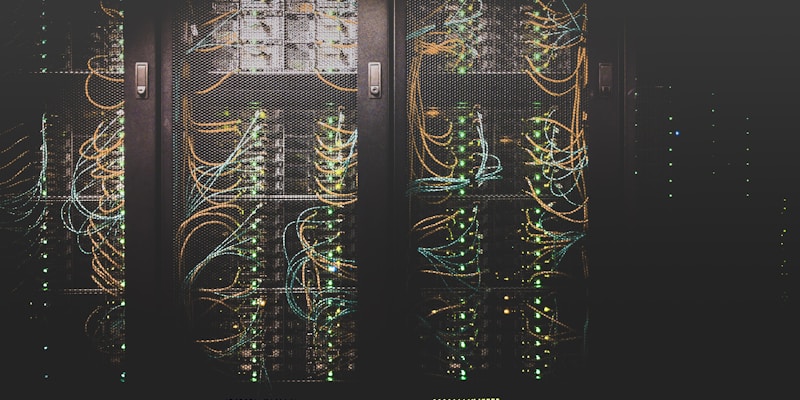
"The key is the loot"
📌 Frequently Asked Questions
What is this report?
Anthropic's fourth threat-intelligence report, "Detecting and countering misuse of AI: September 2026," published September 10, 2026, covering misuse disrupted between December 2025 and August 2026.
What is the "distillation attack" the report describes?
Using a model's inputs and outputs as training data to extract capability. The report attributes such campaigns against Claude to seven China-based labs, one described as the largest measured, with over 151 million exchanges between May and July 2026.
What are Moonshot and DeepSeek accused of doing?
The report says they silently relayed their own users' requests to Claude (routed to Claude Opus) and saved the exchanges for training, likely without their customers' knowledge. These are Anthropic's investigation findings.
What is the most direct takeaway for builders?
Design the agent framework as an attack surface: give every agent its own revocable identity, keep tamper-evident audit logs, require human confirmation for high-privilege actions, and rotate credentials on a schedule.
Why is sophistication no longer a reliable signal?
Because the tooling gap has mostly closed. Low-cost attackers can now run multi-victim, espionage-shaped campaigns at a high level, which makes attribution harder and widens the suspect pool.
🔧 Recommended Tools
📚 Sources
- Anthropic — Detecting and countering misuse of AI: September 2026 (September 10, 2026)
- CellCog — Anthropic's Threat Report: Attacks Run on Agent Frameworks, and the API Key Is the Loot
- Daniel Miessler — Anthropic's Misuse Report, Condensed to 117 Findings
- VIGIL Observatory — Anthropic reported Moonshot and DeepSeek routed real customer conversations through Claude