Google Cloud AI Agent Trends 2026: Five Shifts Redefining Enterprise Value
💡 Tool Tip:When rolling out agent systems, use Evergreen Tools' JSON Formatter to validate agent configs, CSV to Excel to organize business data, and AI Token Counter to estimate grounding cost — daily gear for enterprise agents!
Google Cloud's official AI Agent Trends 2026 report is unambiguous: five shifts will redefine roles, workflows, and business value this year. It's grounded in interviews with AI leaders across Google Cloud and Google DeepMind, customer case studies, and The ROI of AI 2025 survey of 3,466 enterprise decision makers. TELUS's 57,000 employees and Suzano's 95% query-time reduction prove agents aren't a concept anymore — they're engines running production workloads.
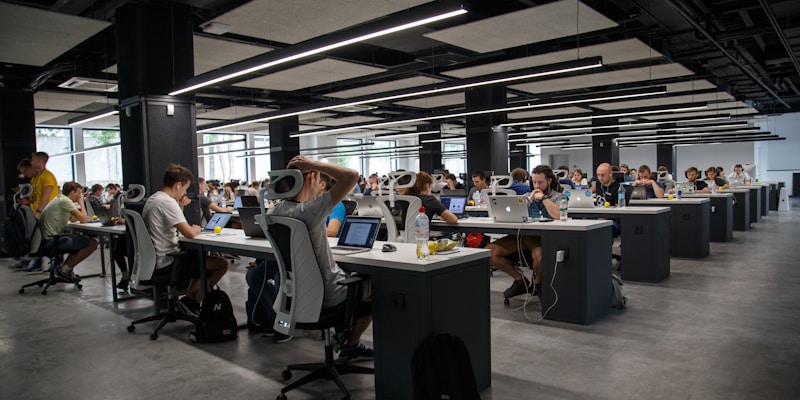
For every employee, workflow, customer, security, and scale
1. Shift One: Agents for Every Employee
The first shift is 'Agents for every employee': by 2026, agents will manage complex, multi-step workflows across systems, and employees' core job becomes setting strategy and overseeing the system of agents responsible for tasks. TELUS Chief AI Officer Jaime Tatis shared a stunning number: over 57,000 team members regularly use AI and save 40 minutes per AI interaction. The report's '10x marketing manager' model shows one manager orchestrating five specialized agents (data, analyst, content, creative, reporting) — freed from busywork to focus on high-impact brand storytelling (code sample 1).
# The 10x marketing manager: a system of five specialized agents
{
  "agent_system": "marketing_team",
  "employees": ["marketing_manager"],
  "agents": [
    { "name": "data",      "task": "sift millions of data points for market patterns" },
    { "name": "analyst",   "task": "monitor trends, competitors, sentiment 24/7" },
    { "name": "content",   "task": "draft social posts and blog copy in brand voice" },
    { "name": "creative",  "task": "generate images and video for campaigns" },
    { "name": "reporting", "task": "pull weekly campaign data, one-page summary" }
  ],
  "human_role": "set strategy, review output, final quality check"
}
2. Shift Two: Agents for Every Workflow
The second shift centers on 'grounded agentic systems' — agents running on your enterprise context. Grounding anchors a model's responses to a specific, verifiable set of facts: internal systems, knowledge bases, customer data, and past work (code sample 2). Suzano is the showcase: the world's largest pulp manufacturer worked with Google Cloud to build a Gemini Pro agent that translates natural-language questions into SQL against SAP materials data, cutting query time by 95% across 50,000 employees.
# Grounding: anchor agent answers to your enterprise facts
from rag import GroundedRetriever, EnterpriseIndex

retriever = GroundedRetriever(
    index=EnterpriseIndex(
        sources=["internal_wiki", "customer_data", "past_work"],
    )
)

def ask(question: str):
    facts = retriever.top_k(question, k=5)  # only verifiable facts
    return generate_answer(question, context=facts)  # no free recall
# Natural language to SQL: the Suzano pattern
-- Employee asks in plain language, agent generates SQL
-- SELECT * FROM materials WHERE material_number = ? -- NO
SELECT
material_number,
description,
plant,
available_qty
FROM sap_materials
WHERE lower(description) LIKE '%eucalyptus%'
AND available_qty > 0
ORDER BY available_qty DESC
LIMIT 50;3. Shift Three: Concierge-Like Customer Agents
The third shift is 'Agents for your customers' — concierge-like experiences instead of mechanical FAQ bots. Customer agents understand goals, act across systems, and escalate gracefully to humans in complex situations. The value is in being proactive, personalized, and context-aware, like a hotel concierge. That requires enterprises to first organize customer and product data into retrievable ground truth.
4. Shifts Four & Five: Security Agents and Scaling Talent
Shift four is 'Agents for security' — moving from alerts to action: agents analyze alerts, find root causes, and execute fixes, freeing security teams from alert fatigue. Shift five is 'Agents for scale': the report is blunt that upskilling talent will be the ultimate driver of business value. When every employee becomes a human supervisor of agents, the bottleneck is no longer model capability — it's your team's ability to orchestrate.
5. The New Integrated Working Model: Everyone Supervises Agents
The report's new working model: from entry-level analyst to senior VP, every employee becomes a human supervisor of agents — the primary job is no longer performing every mundane task personally, but orchestrating a team of specialized agents toward a goal. New responsibilities: delegate repetitive tasks, set goals, outline strategy, and verify quality (code sample 4). Google Cloud Japan's customer engineering lead notes tools like Gemini Enterprise let knowledge workers build their own agents, freeing system integrators for complex, long-term initiatives.
# Human supervisor of agents: delegate, set goals, verify quality
def supervise(agent_system, goal):
    for agent in agent_system:
        agent.set_goal(goal_for(agent))   # human defines outcomes
        output = agent.run()              # agent executes
        verify_quality(output)            # human is the final checkpoint
6. Your Enterprise Action List
Four steps to make the report real: one, start with 'every employee' — pick a high-frequency process (reporting, data queries), give staff a grounded agent using the natural-language-to-SQL pattern in code sample 3; two, organize your knowledge base so agents have verifiable ground truth; three, pilot specialized agents in customer service and security alerting while keeping human final approval; four, put 'agent orchestration' into your training curriculum. Start with a single team and a single workflow — the report's customer stories all began as contained pilots that compounded into organization-wide change. The report's core judgment stands: agents are the first technology that applies to every person — the bottleneck is skills and governance, not models.
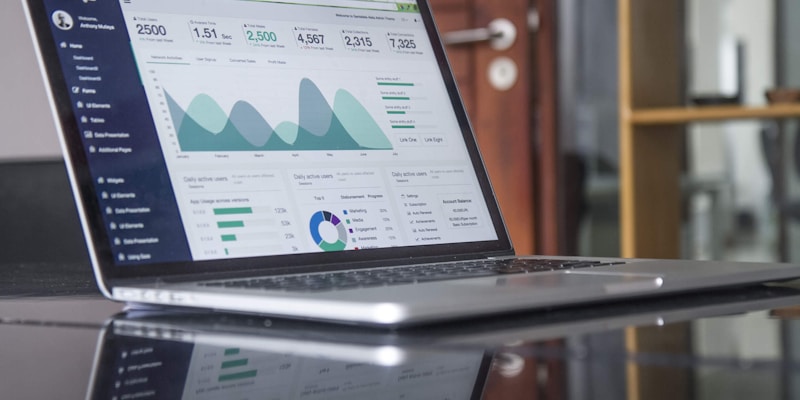
The bottleneck is skills and governance, not models
📌 Frequently Asked Questions
What are Google Cloud's five AI agent trends for 2026?
Agents for every employee, agents for every workflow, concierge-like agents for customers, agents for security (from alerts to action), and agents for scale (talent upskilling as the ultimate driver of business value).
What does the TELUS case study show?
TELUS Chief AI Officer Jaime Tatis reports over 57,000 team members regularly use AI, saving 40 minutes per AI interaction — AI as a 24/7 productivity instrument.
What is grounding in AI?
Anchoring a model's responses to a specific, verifiable set of facts — for an enterprise, its own internal data: systems, knowledge bases, customer data, and past work. Grounding is the prerequisite for reliable agents.
What does the Suzano case demonstrate?
Suzano, the world's largest pulp manufacturer, used a Gemini Pro agent to translate natural-language questions into SQL for SAP materials data, cutting query time by 95% across 50,000 employees — proof of grounded agents' enterprise value.
What is the employee's new role?
Every employee becomes a human supervisor of agents: delegate repetitive tasks, set goals, outline strategy, and verify quality. From executor to orchestrator — strategic judgment becomes the core skill.