Long Context vs RAG in 2026: When 1M Tokens Actually Beats Retrieval
💡 Tool Tip:While tuning LLM architectures, pair them with Evergreen Tools' AI Token Counter to estimate context size, JSON Formatter to inspect model output, and JSON Diff to track output changes — daily companions for RAG and long-context tuning!
In 2026, context windows are the conversation nobody can avoid. Mainstream models routinely accept million-token inputs, and a few claim tens of millions. So the question "is RAG dead?" shows up in every Slack channel, and the honest answer is: no, but the real engineering job is deciding when to use which. This article gives you a decision framework you can copy, with the cost, latency, and correctness math laid out plainly.
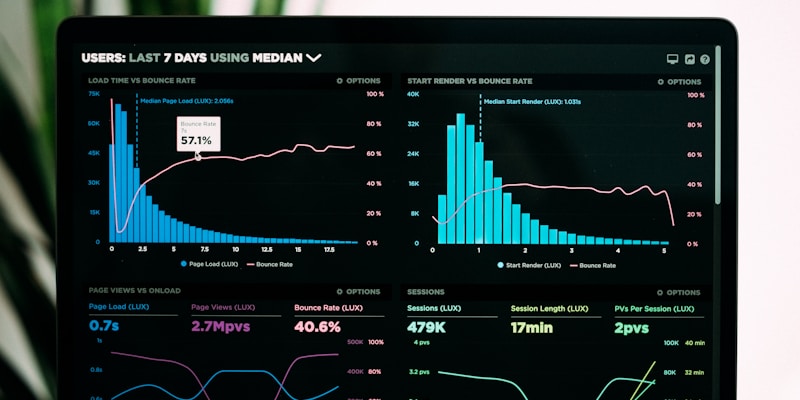
Two mainstream LLM app architectures in 2026
1. How Big Are Context Windows in 2026?
Let's align on facts first: by 2026, long context is a default feature, not a selling point. A million-token window means you can fit an entire trilogy of novels with room to spare — a few large contracts, a mid-size codebase, or a few hundred pages of product docs are no problem. But "fits" doesn't mean "should." Input tokens cost money, first-token latency rises with input length, and models get worse at finding the needle when the haystack is enormous. Those are the two hard costs of the long-context approach.
2. Why RAG Is Still Alive
RAG's core idea is to show the model only what it needs. You chunk documents, embed them, retrieve the 5-10 most relevant chunks per query, and stuff those into the prompt. The advantages still hold in 2026: predictable cost (a few thousand tokens per query), stable latency (no need to chew through a huge input), and explainability (you can see exactly which source text the model cited). For workloads where the total corpus dwarfs any context window — enterprise knowledge bases, support ticket archives, regulatory libraries — RAG remains the only pragmatic choice.
# The classic RAG pipeline: retrieve-then-generate
# Still the default for most production LLM apps in 2026
from llama_index import VectorStoreIndex, SimpleDirectoryReader

docs = SimpleDirectoryReader("contracts/").load_data()
index = VectorStoreIndex.from_documents(docs)

query_engine = index.as_query_engine(similarity_top_k=5)
answer = query_engine.query(
    "What is the renewal notice period in the 2026 master agreement?"
)
print(answer.response)
3. The Cost Math: When Long Context Is Actually Cheaper
Here's the twist: when your "effective knowledge" is small and changes often, long context can be cheaper. Imagine a hot set of contracts updated weekly, totaling 200K tokens. With RAG, you maintain a vector index, manage chunking and metadata, and pay embedding fees per query. With long context, you dump the whole hot set into the prompt — the input is pricier per token, but you delete the entire retrieval stack. The cost model in code sample 3 shows the crossover: at low query volumes with a bounded hot set, long context wins on total cost.
# The long-context alternative: stuff everything, then ask
# Viable once your provider offers 1M+ token windows
from openai import OpenAI

client = OpenAI()

full_contract = "

".join(
    f.read() for f in Path("contracts/").glob("*.md")
)
print(f"Context size: {estimate_tokens(full_contract)}")

answer = client.chat.completions.create(
    model="gpt-6-long",
    messages=[
        {"role": "system", "content": "You are a contract analyst. Cite clause numbers."},
        {"role": "user", "content": full_contract},
        {"role": "user", "content": "What is the renewal notice period?"},
    ],
)
print(answer.choices[0].message.content)
# A cost model: RAG vs long context per 100K queries
# Prices are example 2026 list rates — model them as config
rag = {
"embedding_per_query": 0.00002, # 1K tokens embed
"generation_per_query": 0.004, # 4K token generation
"index_storage": 120.0, # monthly vector DB
}
long_ctx = {
"generation_per_query": 0.09, # 90K token input + 4K output
}
monthly_queries = 100_000
print("RAG total:", rag["index_storage"] + monthly_queries * (rag["embedding_per_query"] + rag["generation_per_query"]))
print("Long ctx total:", monthly_queries * long_ctx["generation_per_query"])4. Correctness: A Missed Retrieval Is the Real Disaster
RAG has a classic failure mode: retrieval recall is not 100%. If the top-5 chunks happen to skip the decisive clause, the model confidently produces a wrong answer — and because it "saw" related fragments, the error sounds extra credible. Long context doesn't have this problem: everything is in the input, so the model can theoretically see it all. The 2026 consensus: for contracts, regulations, and code where a single wrong character is an incident, prefer long context or a high-recall hybrid; for tolerant use cases like summarization and creative writing, RAG's cost profile still wins.
5. Latency: Don't Let First Token Kill Your UX
Long context has a hidden cost in latency. Going from a 10K-token input to 1M tokens can push prefill time from hundreds of milliseconds to tens of seconds — fatal for interactive apps. RAG's prefill time is nearly constant because only a few thousand tokens enter the prompt. If you're building a customer-support bot, RAG usually keeps latency within budget; if you're doing offline batch analysis like a weekly contract audit, a few extra seconds are irrelevant. Put a latency budget in your decision table instead of choosing by vibes.
6. The Mainstream Answer in 2026: Hybrid Routing
More and more teams converge on the same architecture: hybrid routing. Hot data — recent contracts, active repos, popular docs — goes wholesale into long context; long-tail data — historical archives, full knowledge bases — goes through RAG retrieval. A simple routing function switches between the two, as shown in code sample 4. The rules can be delightfully naive: is the hot set under a token threshold? Does the query need precise citations? Start with the hybrid, then tune thresholds against production metrics — safer than betting everything on a single architecture from day one.
# Hybrid routing: use long context for hot docs, RAG for the long tail
# The 2026 pattern most teams converge on
def route(query: str, hot_docs: list[str]) -> str:
    hot_tokens = sum(estimate_tokens(d) for d in hot_docs)
    if hot_tokens < 200_000 and "clause" in query.lower():
        return answer_from_long_context(hot_docs, query)
    return answer_from_rag(query)

hot_docs = load_recent_contracts(last_n_days=30)
while True:
    q = get_next_user_query()
    print(route(q, hot_docs))
Turning architecture choices into measurable engineering decisions
📌 Frequently Asked Questions
How big can context windows get in 2026?
Mainstream models commonly support million-token inputs, and some frontier models claim tens of millions. But "supported" doesn't mean "recommended" — input tokens are metered, and very long inputs raise first-token latency sharply. Estimate your real need with a token counter before choosing an architecture.
Is RAG really going away in 2026?
No. RAG keeps an unbeatable edge in cost, latency, and explainability, especially for enterprise corpora far larger than any context window. Long context handles small-and-hot data; RAG handles big-and-complete data. They're complements, not competitors.
What is the biggest trap with long-context approaches?
Two: cost and latency. Double the input tokens, double the bill, and a million-token prefill can take tens of seconds — bad for real-time interaction. Very long inputs also degrade the model's ability to locate key facts, so pair them with structured prompts and citation requirements.
How do I decide between RAG and long context?
Three steps: estimate your effective knowledge size with a token counter, define your query volume and latency budget, then assess the cost of being wrong. Small, fast-changing, low-volume, latency-tolerant, high-stakes → long context; otherwise → RAG; most production systems end up hybrid.
Is hybrid routing hard to implement?
No. Tag documents as hot or long-tail, send hot data through long context and long-tail through vector retrieval, and switch with a routing function. Ship one architecture first, add routing after, and tune thresholds with production metrics like cost, latency, and accuracy.