Mistral Large 4 ('Le Chonk'): Europe's 1-Trillion-Parameter Open-Weight Bet on Sovereign AI
💡 Tool Tip:AI Token Counter, AI Code Reviewer, AI Prompt Templates
On October 6, 2026, Mistral AI opened a public preview of Mistral Large 4 (ML4), nicknamed "le Chonk." It is the company's largest model to date and, on paper, its boldest statement about open weights: a natively multimodal, granular Mixture-of-Experts model with 1.05 trillion total parameters and 49 billion active parameters per token, plus a 1.6 billion-parameter vision encoder and a 1 million-token context window. You can call it through Mistral's preview API today, but the weights, the part that makes it "open," do not ship until the end of the month. That single gap is the difference between "you can use it" and "you can run it yourself," and it should shape how you evaluate everything below.
ML4 was trained on 3,800 NVIDIA Grace Blackwell GPUs in Mistral's European datacenters
What Mistral actually shipped
The headline is the scale: 1.05T total parameters, 49B active. The nuance matters more. ML4 uses a granular Mixture-of-Experts design, so only a fraction of the network fires per token, which is how a trillion-parameter model stays affordable to serve. It is natively multimodal, meaning images and text share one model rather than a bolted-on adapter, and it ships in public preview with a 1M-token context window. The most important clause in the announcement is easy to miss: "weights drop end of this month." Until then, ML4 is an API product wearing an open-weight future. Everything else below is scaffolding around that single date.
# Mistral Large 4 (ML4), from Mistral's launch post and model docs.
# Facts, not vibes: all fields below are vendor-stated.

ML4 = {
    'release': '2026-10-06 (public preview)',
    'architecture': 'granular Mixture-of-Experts, natively multimodal',
    'total_params': '1.05T',
    'active_params': '49B',
    'vision_encoder': '1.6B',
    'context_window': '1M tokens',
    'weights': 'scheduled end of month',
    'languages': '160+',
}
Forged in and for Europe
ML4 was trained from scratch on 3,800 NVIDIA Grace Blackwell GPUs inside Mistral's own datacenters in Europe, and the preview runs on that same infrastructure. A significant share of the training data was multilingual, spanning more than 160 languages, including every official EU language. This is the sovereign-AI argument made concrete: an enterprise or government can keep both the model and the inference inside a jurisdiction it controls, under law it can audit. Mistral describes ML4 as the first milestone on a roadmap funded by a €3 billion Series D, which it calls the largest equity round ever raised by a European technology company. It is also why the model's license matters so much to regulated buyers.
# Compare cost per solved task, not cost per token.
# API rates from Mistral docs: $1.36 in / $4.18 out per 1M tokens.

PRICE = {'input': 1.36, 'cached_input': 0.14, 'output': 4.18}  # USD / 1M tokens

def cost_per_task(tokens_in, tokens_out, tasks_solved, cached=0):
    billed_in = max(tokens_in - cached, 0)
    spend = (billed_in / 1e6) * PRICE['input']
    spend += (cached / 1e6) * PRICE['cached_input']
    spend += (tokens_out / 1e6) * PRICE['output']
    return spend / max(tasks_solved, 1)

# A cheaper token that solves fewer tasks is not cheaper at all.
Security is the sharpest wedge: 82% on the reproduce-and-patch test
Cybersecurity is the sharpest wedge
Where ML4 draws its cleanest line is security work. On the Artificial Analysis Cyber Index it ranks among the top five models globally and, per Mistral, leads open-weight models built outside China by a wide margin. On a test that asks a model to reproduce a real vulnerability and then patch it, ML4 scores 82%, the highest of any model Mistral measured; it solves 93% of the 40 Cybench exercises. Several leading closed models, including Claude Opus 5.5 and GPT-6 Astra, score near zero on the reproduction test because they refuse the task. That is the point: defending software often begins with proving a flaw is real, exactly the work safety filters can block. For an open-weight model, that refusal gap is not a nicety; it is the product.
# Route by task. Pay frontier prices only where they change the outcome.

def pick_model(task):
    if task.kind in ('security_repro', 'vuln_patch', 'doc_reasoning'):
        return 'mistral-large-4'      # strong open-weight cyber + multimodality
    if task.kind == 'agentic_coding' and task.needs_self_host:
        return 'mistral-large-4'      # last resort: still a preview today
    if task.kind == 'cheap_classify':
        return 'ministral-3-8b'       # do not burn frontier tokens here
    return canonical_default(task)
The agentic coding and workflow numbers
On coding, Mistral reports 61.7% on DeepSWE v1.1, 59.4% on SWE-Atlas-QnA and 28.3% on Terminal-Bench 4, for a combined Coding Agent Index of 49.8% - ahead of DeepSeek V4 Pro and Qwen3.8 Max on the numbers it cites. On AutomationBench, which spans 657 business workflows across apps like Gmail, Sheets, Slack and Salesforce, it scores 59.9%. On AA-Briefcase, a long-horizon knowledge-work benchmark, it reaches 1,393 Elo. On Dense 200 visual grounding it edges GPT-6 Astra, 42% to 41%. Treat all of these as vendor-reported until independently reproduced, but the pattern is consistent: strongest on security and documents, competitive on agentic coding.
# A minimal, honest eval harness: run your own suite, not the headline.

def evaluate(candidate, baseline, suite):
    rows = []
    for case in suite:
        a = candidate.solve(case)
        b = baseline.solve(case)
        rows.append({
            'case': case.id,
            'candidate_ok': a.ok, 'baseline_ok': b.ok,
            'candidate_cost': a.cost, 'baseline_cost': b.cost,
        })
    wins = sum(r['candidate_ok'] and not r['baseline_ok'] for r in rows)
    return {'net_wins': wins, 'cases': len(rows)}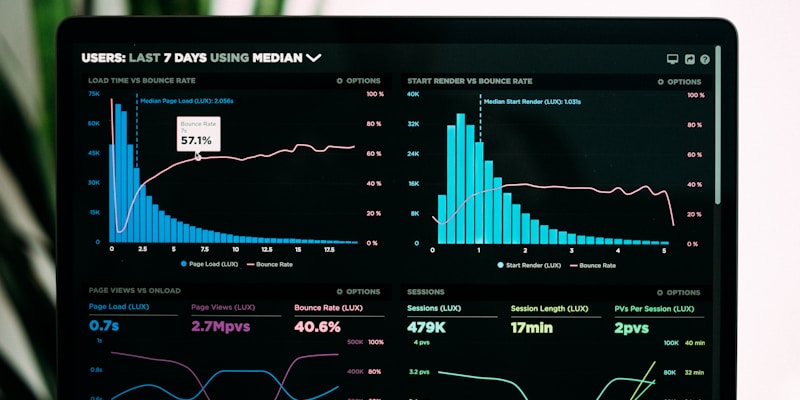
Coding Agent Index 49.8% - strong, but vendor-reported
Pricing, access and what "open" means here
The preview is priced at $1.36 per million input tokens, $4.18 per million output tokens and $0.14 per million cached input tokens, available through Mistral's API and Studio. The weights arrive at the end of the month, and until then the license that will govern them has not been finalized - which means you can prototype on the API now, but you cannot yet assume on-premises or air-gapped availability. Mistral says ML4 will run on private cloud or on-premise for security operations and be available across multiple regions, including an EU deployment it operates end to end. Whether those deployment promises hold under production load is a question only the weights can answer. For a regulated buyer, that is the clause to watch.
# Pre-adoption checklist for an open-weight preview.

CHECKLIST = [
    'weights downloadable today?  -> no (end of month)',
    'license finalized?           -> no (pending)',
    'can it run air-gapped?       -> stated yes, once weights ship',
    'benchmarks independently reproduced? -> no, vendor-reported',
    'pinned a date to re-evaluate?-> yes (weights day)',
]
How to evaluate it for real work
Judge ML4 on your own tasks. Swap it into your coding-agent harness behind a feature flag, run your existing eval suite, and compare cost per solved task, not cost per token. For security teams, test the vulnerability-reproduction workflow that closed models refuse, then verify every output yourself. Set a reminder for the end of the month, when the weights, architecture details and final license land; only then can the "sovereign, self-hosted" claim be tested rather than asserted. A preview is a hypothesis. Your eval suite is the experiment.
📌 Frequently Asked Questions
When was Mistral Large 4 released?
Mistral opened a public preview on October 6, 2026, per its official launch post. The open weights are scheduled for release at the end of the month.
How big is Mistral Large 4?
Per Mistral's model card, ML4 has 1.05 trillion total parameters and 49 billion active parameters, with a 1.6B vision encoder, a granular Mixture-of-Experts architecture, native multimodality and a 1M-token context window.
Can I download the weights today?
No. ML4 is available through Mistral's preview API now, but the weights ship at the end of the month and the final license was not yet published at launch.
Why does Mistral emphasize cybersecurity?
Per Mistral, ML4 ranks among the top five models globally on the Artificial Analysis Cyber Index and leads open-weight models built outside China by a wide margin. It scores 82% on a reproduce-and-patch test and 93% on Cybench, while some closed models score near zero because they refuse the task.
How much does it cost?
The preview API is priced at $1.36 per million input tokens, $0.14 per million cached input tokens and $4.18 per million output tokens, according to Mistral's docs.