Jalapeño: OpenAI's First Custom Chip and What It Means for Inference Economics
Inference is where AI reaches people. On June 24, 2026, OpenAI and Broadcom unveiled Jalapeño, OpenAI's first Intelligence Processor: an accelerator architected around OpenAI's vision for the future of LLM inference and the first AI accelerator in a multi-generation compute platform the two companies are building together. According to OpenAI, it went from initial design to manufacturing tape-out in nine months, and engineering samples are already running machine learning workloads in the lab at production target frequency and power. This is less a hardware review than a repricing of inference economics. Here is what is confirmed, what is not yet, and how developers should read the cost and latency curve it is chasing.
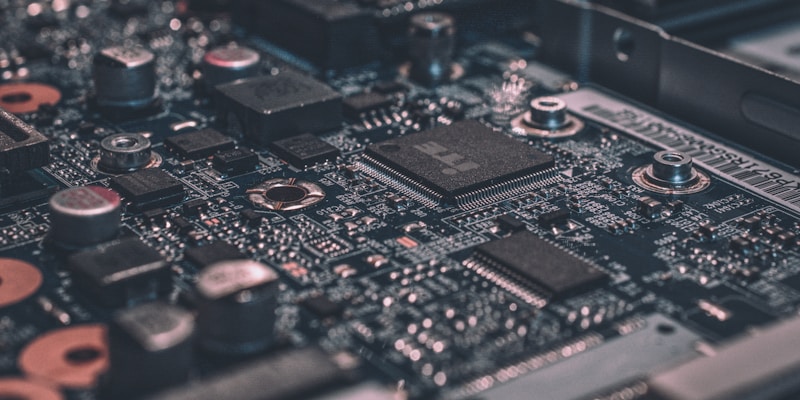
Jalapeño is not a general-purpose accelerator; it is designed from scratch for inference
What was announced
Per OpenAI and Broadcom's investor release, Jalapeño is OpenAI's first Intelligence Processor, designed from the ground up for modern LLM inference rather than adapted from earlier AI workloads. It was delivered to OpenAI's Sam Altman and Greg Brockman by Broadcom's Hock Tan and Charlie Kawwas. The partnership spans Broadcom, for silicon implementation and networking such as Tomahawk networking silicon, and Celestica, for board, rack and system integration. OpenAI says the design is informed by its understanding of LLM fundamentals across models, kernels, serving systems and product needs, while staying flexible enough to work with current and future LLMs across the industry.
# The announcement, in one object. Facts are from OpenAI's page and
# Broadcom's investor release, both dated June 24, 2026.

JALAPENO = {
    "unveiled": "2026-06-24",
    "makers": ["OpenAI", "Broadcom (NASDAQ: AVGO)"],
    "partners": ["Broadcom", "Celestica"],
    "kind": "OpenAI's first Intelligence Processor (AI accelerator)",
    "purpose": "LLM inference, built from the ground up",
    "design_to_tapeout_months": 9,
    "status": "engineering samples running ML workloads in the lab
               at production target frequency and power",
    "deployment": "initial deployment by end of 2026, gigawatt scale,
                   over multiple generations",
    "early_result": "performance per watt substantially better than
                    current state-of-the-art (full report pending)",
}
Why build a chip at all
OpenAI's framing is straightforward: inference is where AI reaches people, so every improvement in cost, speed and reliability shows up in a product someone actually uses, a faster ChatGPT answer, a Codex task that takes more steps with less waiting, an API product that is cheaper to build, or more dependable access when demand is high. More fundamentally, it feeds a full-stack flywheel. Better infrastructure drives compute efficiency; greater efficiency enables better training and serving; better models become better products; better products drive more usage and revenue, which lets OpenAI reinvest in the next generation of infrastructure. Greg Brockman's line is that the world is moving to a compute-powered economy, and Jalapeño is part of making compute more abundant.
# Why a chip at all. OpenAI's own framing: inference is where AI
# reaches people, so every gain in cost, speed and reliability shows
# up in a product someone actually uses.

WHERE_GAINS_LAND = [
    "a faster ChatGPT answer",
    "a Codex task that takes more steps with less waiting",
    "an API product that is cheaper to build",
    "more dependable access when demand is high",
]

# The flywheel: better infra -> cheaper compute -> better training and
# serving -> better models -> more usage -> reinvest in infra.
Design to tape-out in nine months, which OpenAI calls the fastest ASIC cycle yet
Nine-month tape-out: silicon designed with AI
According to OpenAI, Jalapeño went from initial design to manufacturing tape-out in just nine months, which it calls the fastest ASIC development cycle ever achieved in high-performance advanced semiconductors. The speed comes from three things: deep software-hardware co-development with OpenAI's engineering teams, Broadcom's silicon implementation expertise, and, notably, the use of OpenAI's own models to accelerate parts of the design and optimization process. The same models served to users are helping improve the infrastructure that will run future models. If AI can help engineers design better chips faster, the argument goes, it can lower compute costs across the industry and make advanced AI more accessible.
# A simple cost model to reason about what an efficiency win buys.
# Plug your own numbers; the point is the shape, not the constants.

def monthly_inference_cost(tokens_month, price_per_mtok,
                           fixed_platform_usd=0):
    variable = (tokens_month / 1_000_000) * price_per_mtok
    return variable + fixed_platform_usd

def break_even_months(capex_usd, old_cost, new_cost):
    saving = old_cost - new_cost
    return None if saving <= 0 else round(capex_usd / saving, 1)

# If a custom platform cuts cost per token by X% and you run billions
# of tokens a month, the break-even window is a function of X and capex.
What it means for developers
For developers, only two variables matter: cost per token, and the combination of latency and throughput. Jalapeño is pitched at combining the power and throughput of today's leading accelerators with latency closer to the fastest specialized inference systems, aimed at interactive LLM products at scale. But note OpenAI's wording. Early testing shows Jalapeño will deliver performance per watt substantially better than current state-of-the-art, while final performance is still being measured and a detailed technical report will arrive in the coming months. That is a directional bet, not a number you can put in a budget. Until verifiable benchmarks land, treat the efficiency claim as direction, not fact.
# Latency vs throughput is a serving trade-off, not a hardware given.
# Jalapeño is pitched at combining accelerator throughput with latency
# close to the fastest specialized systems, aimed at interactive
# products at scale.

SERVING_PROFILES = {
    "interactive_chat": {"batch": 1, "priority": "time to first token"},
    "agent_workflow":  {"batch": 1, "priority": "tokens per second"},
    "offline_batch":   {"batch": 256, "priority": "cost per token"},
}

def pick_profile(workload):
    if workload.interactive:
        return SERVING_PROFILES["interactive_chat"]
    if workload.agentic:
        return SERVING_PROFILES["agent_workflow"]
    return SERVING_PROFILES["offline_batch"]
The target is a multi-generation platform deployed at gigawatt scale
Capacity and cost homework you can do today
Whatever silicon you run on, a few things are worth doing now. Measure p50 and p95 latency on your real workload, not a demo. Track cost per successful task rather than cost per token, because the latter hides retries and failures. Cache aggressively: repeated agent context is pure waste, and long contexts make it worse. Route by task, using cheap models for classification and routing and strong models for reasoning. And keep an exit path: never let one accelerator lock your product in. Writing this down now means that when the next model or chip lands, you have a comparable baseline.
# Capacity planning you can do today, regardless of which chip you
# run on. Write the budget down before the next model lands.

PLAN = [
    "measure p50 and p95 latency for your real, not demo, workload",
    "track cost per successful task, not cost per token",
    "cache aggressively: repeated agent context is pure waste",
    "route by task: cheap models for routing, strong models for reasoning",
    "keep an exit path: never let one accelerator lock your product in",
]

# OpenAI says a detailed technical report on performance is coming; treat
# headline efficiency claims as directional until you can test them.
What to watch next
Two things. First, the deferred performance report. Only when real benchmarks, power and cost curves are public does Jalapeño move from strategic narrative to procurable reality. Second, the deployment cadence. OpenAI says this is the first step of a multi-generation platform, with initial deployment by the end of 2026 and expansion in the years ahead, targeting gigawatt-scale deployment with data center partners. If that roadmap holds, what it rewrites is not a single benchmark score but the industry's expectation that inference costs keep falling. The safest posture for developers is to assume nothing, and to make cost and latency measurement a habit.
📌 Frequently Asked Questions
What is Jalapeño?
Per OpenAI and Broadcom's announcement dated June 24, 2026, Jalapeño is OpenAI's first Intelligence Processor, an accelerator architected from the ground up for LLM inference and the first AI accelerator in a multi-generation compute platform the two companies are building together.
Why would OpenAI build its own chip?
OpenAI says inference is where AI reaches people, so improvements in cost, speed and reliability show up directly in products like ChatGPT, Codex and the API. It also serves a full-stack flywheel strategy, where better infrastructure drives efficiency that supports better models and more usage.
What does a nine-month tape-out mean?
Per OpenAI, Jalapeño went from initial design to manufacturing tape-out in nine months, which it calls the fastest ASIC development cycle in high-performance advanced semiconductors. The speed came from software-hardware co-development, Broadcom's silicon implementation, and using OpenAI's own models to accelerate parts of the design.
Can I trust the performance numbers?
Treat them cautiously. OpenAI says early testing shows performance per watt substantially better than current state-of-the-art, but it also states final performance is still being measured and a detailed technical report is coming in the months ahead. Until verifiable benchmarks exist, treat the claim as directional.
What should developers do now?
Make cost and latency measurement a habit: test p50 and p95 latency on real workloads, track cost per successful task rather than per token, cache repeated context aggressively, route tasks to appropriately sized models, and keep an exit path so no single accelerator locks you in.
🔧 Recommended Tools
AI Token Counter
Estimate inference cost per token
API Response Time Calculator
Set latency budgets for interactive inference
API Rate Limit Calculator
Plan capacity and limits from throughput
AI Data Analyzer
Analyze cost distribution across real workloads
API Mock Generator
Load-test interface contracts before switching hardware
📚 Sources
- OpenAI - OpenAI and Broadcom unveil LLM-optimized inference chip (2026-06-24)
- Broadcom Investor Relations - LLM-optimized Intelligence Processor (2026-06-24)
- Tom's Hardware - Jalapeño is a reticle-sized ASIC built in nine months
- WSJ - OpenAI, Broadcom develop custom chip for AI inference
- OpenAI - full-stack platform strategy